
-
-
Bird Detection, Monitoring, and Deterrence System Solution
-
Portable Green Laser Bird-Repellent System Solution
-
Solution for Road Vehicle Overtemperature Warning System
-
SETTALL Low-Altitude Defense System Solution
-
Touchscreen Electronic Sandbox Solution
-
Ballistic tracking radar system solution
-
Multi-Functional Rapid Screening and Elimination Device Solution for Poisoned Individuals
-
Handheld Integrated Gas and Nuclear Radiation Detection Solution
-
Nuclear Radiation Imaging Solutions
-
-
Mountain Conservation and Monitoring System Solution
-
Super Video Investigation Individual Soldier System Solution
Solution
-
-
-
-
-
-
Multi-purpose phased-array radar
Current model: SETTALL-RST8000
Retail price
Market price
Remaining inventory
隐藏域元素占位
Overview
The RST8000 radar is a multi‑purpose, fully coherent, one‑dimensional active phased‑array, monopulse two‑coordinate radar. It is suitable for a wide range of complex terrains and sea conditions and can detect targets such as pedestrians, vehicles, and vessels. Following extensive field deployment and continuous optimization, the radar delivers reliable and stable performance, meeting the demanding operational requirements of extreme cold, high humidity, and salt‑fog environments.
Technological Advantages
By employing active phased‑array scanning technology, azimuth‑plane electronic beam steering is achieved. Compared with mechanically scanned radars, this radar offers technical advantages such as a higher scan rate, faster beam‑pattern reconfiguration, and improved target‑measurement accuracy.
Employing advanced radar signal-processing technology, the system achieves a low false-alarm rate, delivers clean surveillance imagery, and can accurately detect and lock onto targets.
The elevation beam has a wide coverage angle, enabling simultaneous surveillance of ground targets, sea surfaces, valleys, and slopes, with sufficient power to detect pedestrians, vehicles, vessels, and animals.
It features flexible networking capabilities, allowing for adaptable network configurations based on actual requirements, enabling a single display‑control terminal to simultaneously manage multiple radar hosts.
Each functional module is designed in a modular fashion, with clear and straightforward interfaces, making maintenance and servicing convenient.
The structure features a refined layout, with a lightweight and compact design that facilitates transportation, portability, and rapid deployment.
Featuring an integrated human–machine design, the radar is easy to operate and highly practical.
All active components are designed for power‑efficiency, resulting in low overall radar power consumption; it is compatible with a variety of power supply configurations.
Employing fanless thermal equalization technology, and validated through full‑machine simulation optimization and physical testing,
Suitable for extreme environments such as high temperatures and severe cold;
It features a fully sealed design, with the entire unit meeting IP66 standards, offering dustproof, waterproof, and salt‑spray‑resistant performance. With high reliability, it is well suited for harsh environments such as gobi deserts, arid deserts, and marine settings.
This radar can be widely deployed in border and coastal surveillance, critical‑area protection, battlefield reconnaissance, and other applications.
Radar Operation Diagram
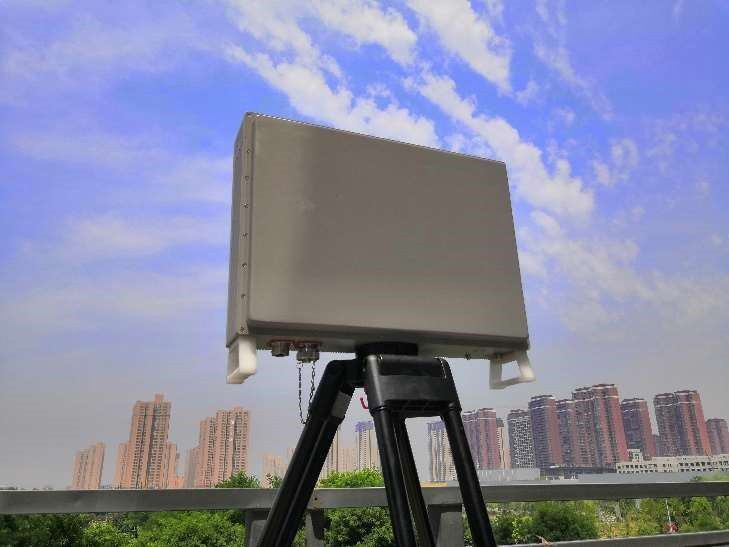
Radar physical diagram: This radar can combine and expand multiple array panels to achieve the desired azimuth coverage—90°, 180°, 270°, or 360°.
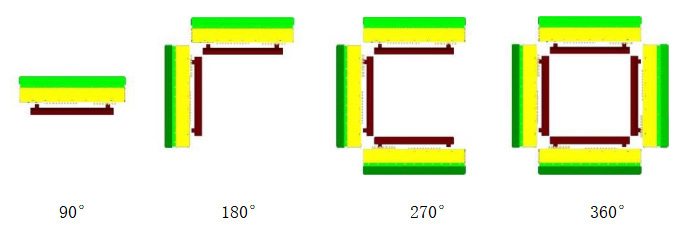
Schematic diagram of radar multi-array configuration
composition
The radar consists of a display and control terminal and a radar host, with the system configuration shown in Figure 3.
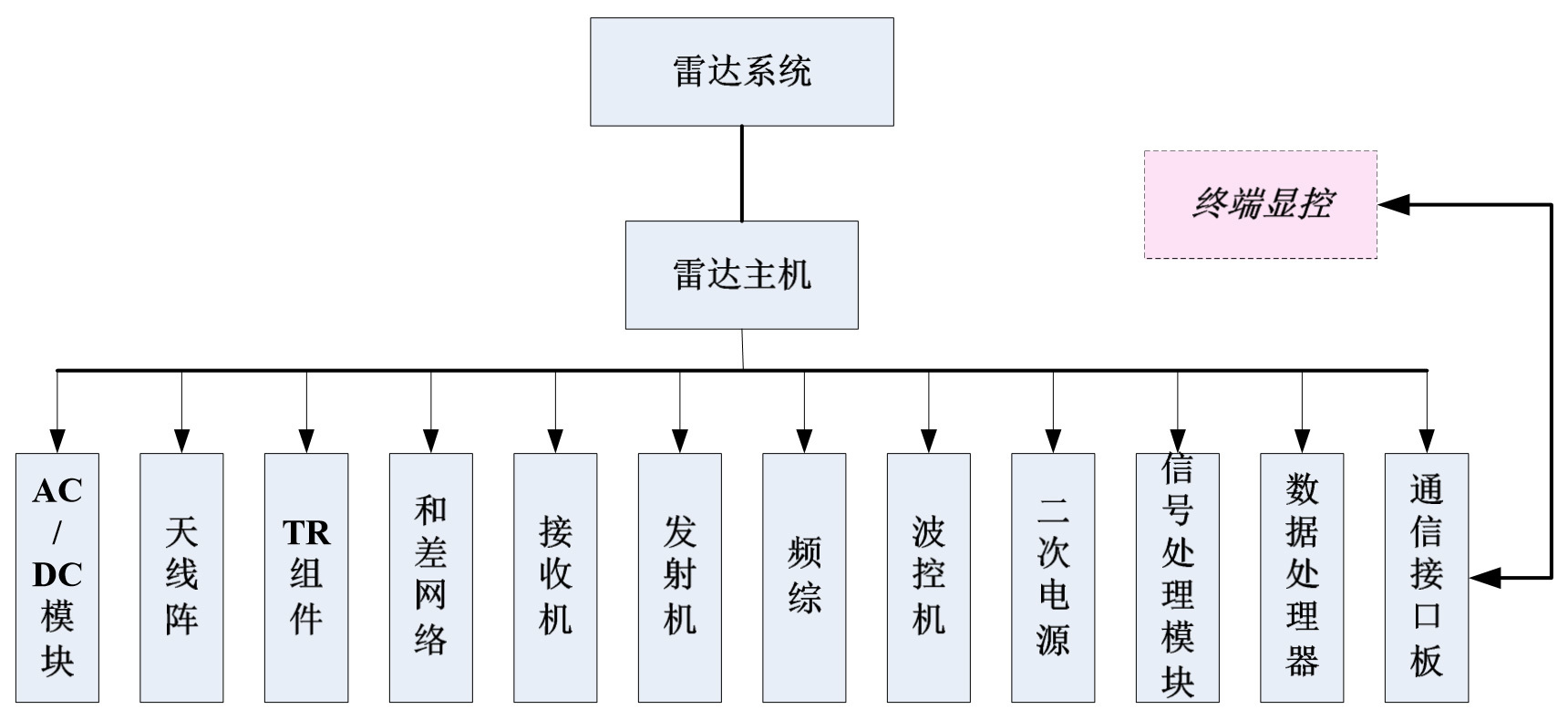
Figure 3 Block Diagram of the Radar System
The radar host can connect to an upper-level system via network, supporting networked operation or remote control; it can also be equipped with a terminal display and operate as a standalone system.
The terminal display is offered as an optional configuration and can be implemented using an industrial PC, a ruggedized computer, or a handheld terminal, depending on user requirements.
The radar host and the terminal display unit are connected via an Ethernet cable (Gigabit, backward compatible with 100 Mbps). The radar is primarily powered by mains electricity and supports a DC input voltage of 18 V to 32 V; it can also be powered by alternative sources such as solar or wind energy.
Functionality
Radar is primarily used for perimeter and critical‑site surveillance, detecting targets such as personnel, vehicles, and vessels within the monitored area. Its main functions are as follows:
It can perform functions such as searching for and tracking targets including pedestrians, moving vehicles, and vessels.
It features online monitoring, fault diagnosis, fault localization, and temperature monitoring.
Equipped with self-positioning and orientation capabilities, among others;
It features automatic recording and playback of operating states, among other functions.
It can provide guidance information to the upper-level system and possesses collaborative working capabilities.
It features networking capabilities, enabling coordinated operation among multiple radars.
Key Technical Specifications
| Active phased-array pulse radar |
|
| Work system |
One-dimensional active phased-array monopulse |
| Operating frequency |
X-band, bandwidth 200 MHz |
| Operating frequency |
11 items |
| Work mode |
Search, track, fixed-point monitoring, self-inspection |
| Azimuth scanning range |
Azimuth ±45° electronic scanning, with the scan range freely adjustable within ±45°. |
| Elevation coverage range |
7° |
| Scanning method |
Mutual sweep + machine sweep |
| Scanning range |
±45°, and the scan can be set arbitrarily within the ±45° range. |
| Scope machine-scan scope |
360° continuous azimuth scanning |
| Tracking mode |
TWS |
| TWS tracking capability |
≥200 batches (the parameter displays batches ≥40) |
| Operating range |
|
| For personnel |
≥8 km (V ≥ 0.5 m/s, RCS = 0.5 m², Pd = 85%) |
| For vehicles |
≥18 km (RCS = 10 m², Pd = 85%) |
| Naval patrol boat |
≥17 km (RCS = 2 m², Pd = 85%) |
| Large vessels |
≥40 km (RCS = 100 m², Pd = 85%) |
| Minimum operating distance |
≤150m |
| Target speed range |
0.5 m/s to 50 m/s (1.8 km/h to 180 km/h) |
| Distance display range |
0 km to 40 km |
| Range resolution |
≤10m |
| Accuracy error |
Distance ≤ 5 m, azimuth ≤ 0.4°, speed ≤ 0.1 m/s |
| Power consumption |
≤150W |
| Power supply |
Mains power, power plant, or battery-powered |
| Weight |
Not greater than 13 kg |
| Structural dimensions |
|
| Radar host machine |
475mm×350mm×110mm |
| Reliability and Maintainability |
MTBF ≥ 5000h, MTTR ≤ 0.5h |
| External interface |
RJ-45 communication protocol TCP/IP |
| Environmental adaptability |
|
| Storage temperature |
-45℃ ~ +65℃ |
| Operating temperature |
-40℃ ~ +55℃ |
| Relative humidity |
95±3% (30°C, no condensation) |
| Protection rating |
IP66 (dust-tight, protected against water jets) |
Standard Package Contents
Content update in progress,...
Upon unpacking and use, the standard package includes the above accessories.
Inquiry about this product?
Obtain relevant technical support
Quick Contact
Quick contact
sales@settall.com
13001168699
Download Materials
Data download
Related Videos
Related Videos
Contact
EMAIL:Guojin@settall.com
8th Floor, Building 14, Zone 7, Headquarters Base, West Outer Ring Road, Fengtai District, Beijing